
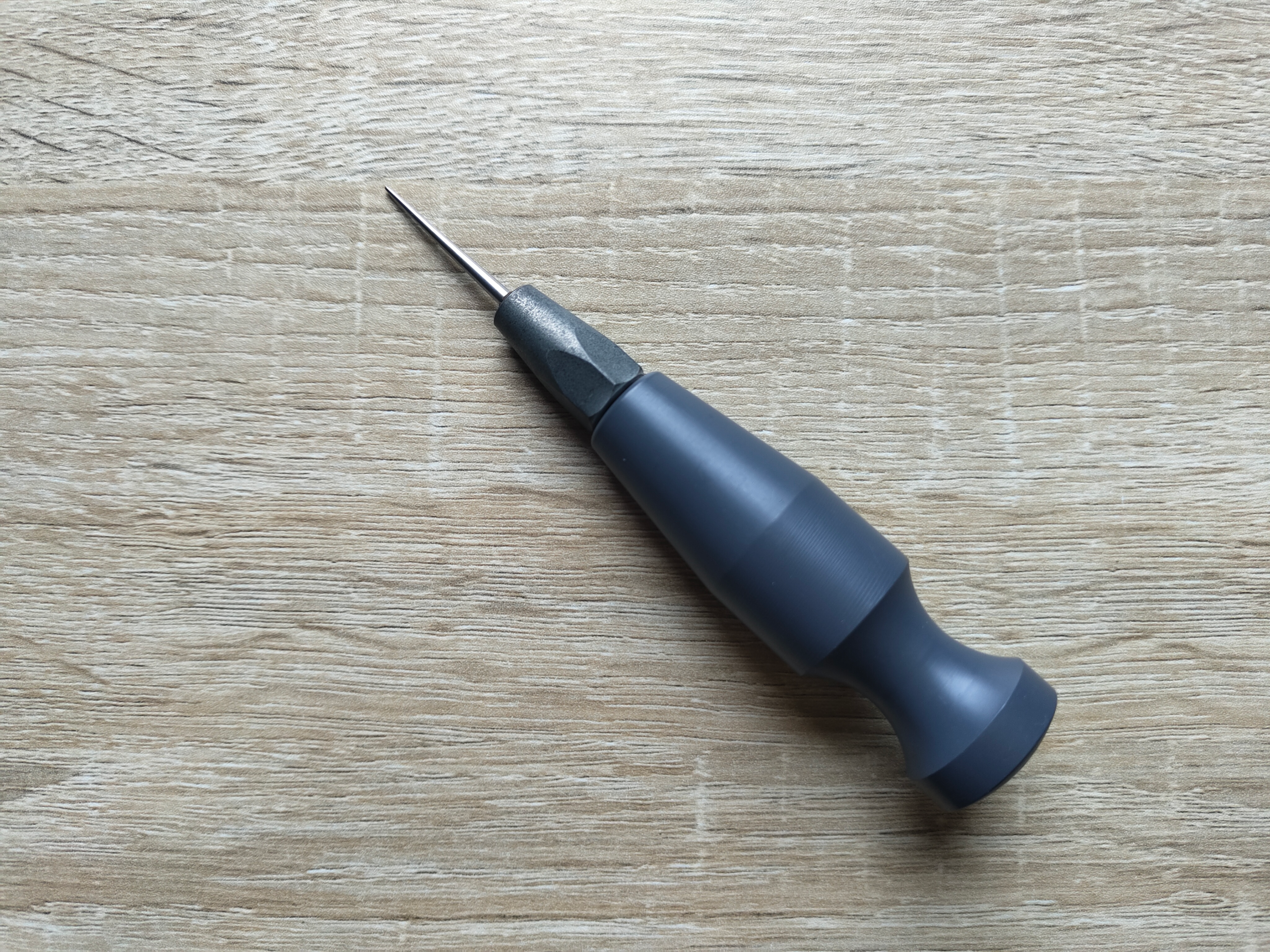
After nearly two years using the Fine Awl from Klipper USA, I’ve concluded it’s one of the best upgrades I’ve made to my stringing arsenal.
Klipper USA are best known for their dropweight tabletop stringing machines, but their tools are stocked by other retailers. I bought their Klipper Fine Awl in an attempt to make life easier when it came to badminton stringing, but it’s come in handy more than a few times on difficult tennis rackets (the notoriously tricky, but rewarding Angell TC90 16×18 comes to mind).
Buying direct from Klipper in the US is rather affordable at $9.95, but for those of us in Europe, the Klipper Fine Awl will be about £17-25 depending on the retailer (I bought mine from Racquet Depot UK). It’s not exactly cheap for such a simple tool, but I’ve decided it’s definitely worth the money.
For anything The Human has to interact with on a day-to-day basis for work, I’m a firm believer in having high quality products available, and the Klipper awl certainly fits the bill. Total mass of a product of course, often just adds the mere perception of quality, but in the case of the Klipper awl the true quality actually backs it up. The handle provides good weight and feel, the finish on both the handle and point is excellent, and I feel no play in the chuck that locks the pieces in place.
Pros
- High quality & excellent attention to detail
- Compact form factor
- Consistent performance
- A must for badminton stringing
Cons
- Pricey (outside the USA)
- Typically supplements a larger awl
- Stiffer awl point may break with wear and tear
While I can’t find any info on the exact steel for the awl point, it appears to be somewhat stiffer than other racket awls I have tried, and this lack of deflection makes it easy to produce consistent results when working on grommets. Some of this is also intelligent design, as the shorter length of both the handle and point will reduce flex in the tool overall, and I actually quite like this compact form factor – the Klipper feels less awkward to use on rackets in comparison to my experience with longer tennis awls.
I also appreciate the fine point of the awl is rounded. There is no sharp point to bend out of place, but most importantly it ensures the delicate string is not easily harmed when widening grommets during the stringing process. With careful use, I have had no issues widening strung badminton grommets with the Klipper awl, and seeing the positive results interacting with the far thinner badminton string gave me high confidence in using it on the comparatively tougher tennis equipment.

That being said, a caveat of the Klipper awl is fine point is it’s probably too narrow to sufficiently open up tennis grommets, but generally it gets the tricky start out of the way, after which I guide a wider, more typical tennis awl to complete the job. I also encountered an issue in which point of my Klipper awl snapped about a year into using it.
I’ll concede this was somewhat my fault – my stringing tools get moved around a lot and I likely dropped it – but these kind of accidents aren’t inconceivable when the user is stringing rackets every day, and I believe it is a trade-off of the point being made from less malleable steel. Thankfully, the point alone is replaceable via Klipper themselves, so I was able to get back to using the awl without buying an entire new one.
For anyone stringing professionally, time is important, so I recommend having this tool on hand to allow you to quickly navigate the difficult rackets. Those who string their own rackets may be on a tighter budget – in which case I say any awl is better than none – but it may be worth checking out the Klipper fine awl, as it will make life much easier as you gain experience stringing rackets.
Leave a Reply